Top 10 AI Games and Platforms That Change How Games Are Played
Table of Contents
- 1. AI Dungeon
- 2. Inworld AI-powered Games
- 3. The Elder Scrolls V: Skyrim with NVIDIA ACE Mods
- 4. Convai-powered Experiences
- 5. Promethean AI
- 6. Warhammer 40,000: Rogue Trader with an AI Assistant
- 7. AI Arena
- 8. Storyteller (with AI Extensions)
- 9. Minecraft with Mods from Microsoft and OpenAI
- 10. Luma AI Game Worlds
- The Future of Gaming Is Already Here
Modern games are increasingly using artificial intelligence not merely as a tool for animating enemies, but as a key element of game design. Thanks to AI, game worlds are becoming alive, adaptive, and unpredictable. In this ranking, we have collected projects where machine learning and generative AI technologies genuinely affect gameplay, creating a unique experience for every player. These AI games demonstrate how algorithms can do more than improve graphics or dialogue: they can shape the plot, character behavior, and even the rules of the game.
AI in games today is not just about “smart” bots, but about full-fledged co-creators of the gaming experience. They analyze user behavior, adapt to their play style, generate content in real time, and even learn from mistakes. This approach opens up new possibilities for interactive storytelling, immersive worlds, and personalized gameplay.
1. AI Dungeon
AI Dungeon is a pioneer in generative storytelling, launched back in 2019 and repeatedly updated since then. Originally built on GPT-2, the project quickly moved to more powerful models, including GPT-3 and proprietary architectures. Unlike traditional text quests with fixed branching paths, AI Dungeon creates a story on the fly, responding to every phrase entered by the player. This makes it possible to immerse yourself in an endless adventure where the plot can go in any direction—from epic fantasy to absurd comedy.
The game offers several key modes:
- Classic mode — the player chooses a genre and sets off on an adventure.
- Create Your Own mode — the user defines their own setting, characters, and rules.
- Story mode — AI continues the narrative based on uploaded text.
- Multiplayer — collaborative story creation with other players in real time.
AI Dungeon is especially popular among role-playing game fans and writers who use it as a tool for generating ideas. Although the AI sometimes produces inconsistent or strange responses, the system’s overall flexibility and creativity make it unique.
2. Inworld AI-powered Games
Inworld is not a standalone game, but a full-fledged platform for creating next-generation AI characters. It allows developers to add NPCs to their projects that can hold meaningful conversations, remember past interactions, and adapt their behavior to the player’s style. The technology is based on a combination of language models, decision-making systems, and emotional modeling. As a result, characters do not merely “respond”—they behave like living beings with motivations, goals, and personalities.

Key Inworld capabilities:
- Voice and text interaction in real time.
- Support for multimodal reactions (speech, facial expressions, gestures).
- Integration with Unity and Unreal Engine.
- The ability to define a character’s “personality” through parameters (for example, “a friendly but suspicious merchant”).
Inworld has now shifted its focus toward voice AI: the company’s main product is speech synthesis and recognition, voice cloning, and access to a hundred language models through a single API. For games, this means lifelike voice dialogue and character voiceovers; you can get started for free and pay as you go.
3. The Elder Scrolls V: Skyrim with NVIDIA ACE Mods
Skyrim is one of the most moddable games in history, and with the arrival of NVIDIA ACE (Avatar Cloud Engine), its potential has reached a new level. ACE is a cloud platform for creating AI avatars with advanced language and behavioral models. In an experimental Skyrim mod, NPCs gained the ability to hold endless natural-language conversations, answer questions about the world, offer advice, and even tell jokes.
Benefits of the AI modification:
- Dialogue in natural language, including languages other than English.
- Contextual understanding: characters remember what they have discussed previously.
- Adaptation to the player’s actions (for example, if you killed their friend, they will become hostile).
- No pre-recorded lines—all content is generated dynamically.
Although the mod still requires an Internet connection and a powerful PC, it demonstrates how even older games can receive a second life thanks to AI. This is not merely an improvement—it is a transformation of the game world into a living ecosystem.
4. Convai-powered Experiences
Convai specializes in creating AI characters with a focus on voice interaction and emotional intelligence. Unlike purely text-based solutions, Convai allows players to speak aloud while characters respond with voice and appropriate intonation. The technology uses neural networks for speech recognition, response generation, and real-time facial animation control. This creates the effect of genuine communication, especially in VR environments.
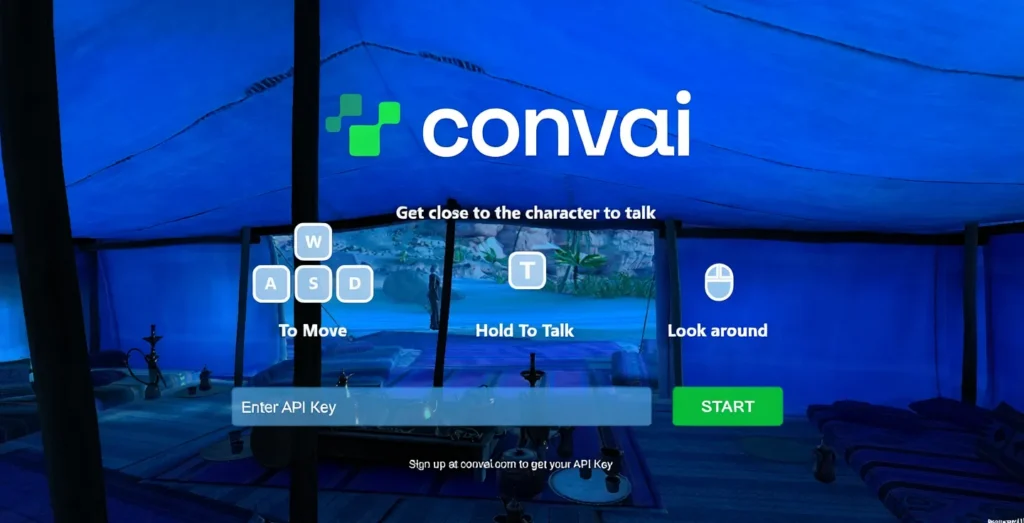
Features of the Convai platform:
- Support for 3D avatars with lip-sync and facial expressions.
- The ability to define a character’s goals and knowledge through a simple interface.
- Integration with popular game engines.
- The character’s own knowledge base and a choice of language model.
- Free plan — 100 interactions per month; paid plans — from $29 per month.
Some studios are already testing Convai in RPG and simulator prototypes where dialogue is not a secondary feature but the foundation of the gameplay. The technology is particularly promising for VR games, where immersion reaches its highest level.
5. Promethean AI
Promethean AI is an AI assistant for artists and studios that build 3D worlds for games, film, and architectural visualization. The service was founded by a former Naughty Dog art director, and its users include PlayStation Studios. Promethean AI does not create a world from scratch: it works with the team’s own assets, finding the required models and materials based on natural-language requests and helping assemble them into an environment.

Promethean AI capabilities:
- The team’s asset library with description-based search: 3D models, images, videos, animations, and documents.
- Asset selection and placement during scene assembly.
- Inspiration mode: reference collections and answers to design-related questions.
- Integration with Unreal Engine and plugins for Unity, 3ds Max, Maya, and Blender.
Files remain with the team: the service does not upload assets to the cloud or train on them. A free version is available for individuals, while team and enterprise access is provided upon request.
6. Warhammer 40,000: Rogue Trader with an AI Assistant
Warhammer 40,000: Rogue Trader is a complex CRPG with a deep ruleset inspired by the tabletop game. Because of the abundance of mechanics, newcomers may find it difficult to get started, and this is where external AI assistants can help. The community has developed chatbots trained on the game’s rules, universe lore, and tactical guides. These assistants can explain how the cover system works, suggest an optimal party build, or propose a non-obvious story choice.
AI assistant functions:
- Explaining game mechanics in plain language.
- Generating additional quests and side stories.
- Analyzing the current situation and providing tactical recommendations.
- Real-time support through Discord or a web interface.
This is an example of how AI can operate outside the game as an external companion that expands its depth and accessibility. Such solutions are especially relevant for niche and complex projects.
7. AI Arena
AI Arena is a browser-based fighting game in which the player does not fight directly, but trains an AI fighter. You play as the character, and the model learns from your actions (learning by example): when to attack, defend, and dodge. The fighter then enters ranked matches against fighters trained by other players.
AI Arena features:
- Training a fighter based on your own play style, without programming.
- Ranked battles and tournaments between player models.
- The game runs on the Arbitrum blockchain: fighters are NFTs, the in-game currency is the NRN token, and victories earn rewards.
- Developer: ArenaX Labs; the game is currently in beta.
Important: this is a play-to-earn crypto game. Purchasing NFTs and tokens involves financial risk, and the price of NRN is highly volatile.
8. Storyteller (with AI Extensions)
Storyteller was originally a puzzle game in which players combine visual cards to create scenes from well-known stories. However, with the emergence of community-created AI extensions, the game has evolved into a powerful digital storytelling tool. Users can now generate characters, dialogue, and even unexpected plot twists using built-in AI modules. This makes it possible to create not only classic stories, but also absurdist or experimental narratives.
AI extension capabilities:
- Generating characters with unique traits.
- Automatically creating dialogue based on a given topic.
- Suggesting unexpected plot twists.
- Exporting stories in PDF or video format.
The game has become popular among educators, writers, and psychologists who use it for creative and therapeutic purposes. Here, AI acts as a co-author that inspires new ideas.
9. Minecraft with Mods from Microsoft and OpenAI
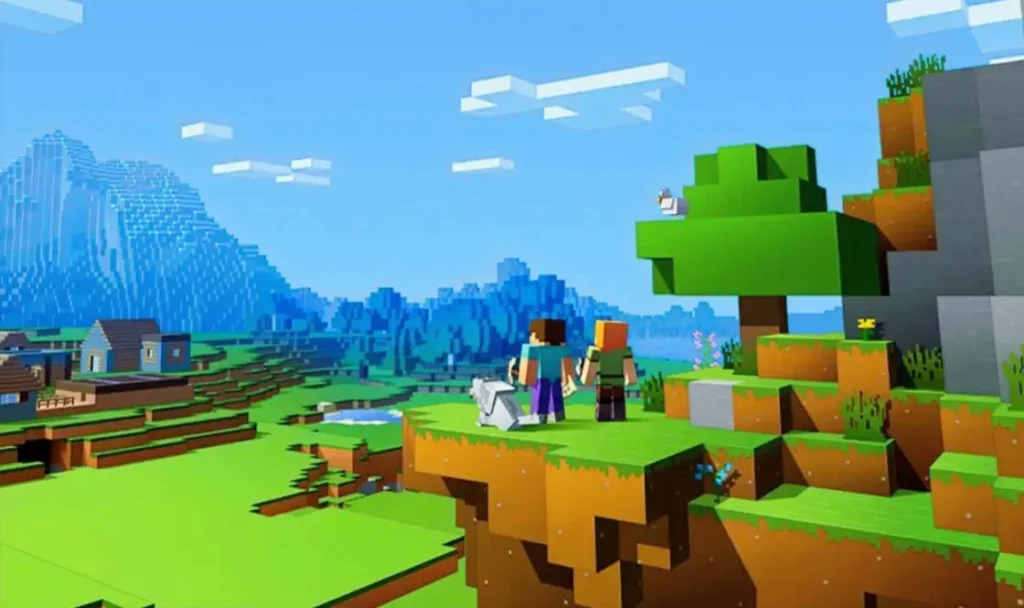
Minecraft has long served as a testing ground for AI technologies. Microsoft and OpenAI developed Project Malmo and its successor, Voyager, an agent capable of learning in Minecraft without prior programming. Voyager uses a large language model to understand goals, find solutions, and even write its own code to complete tasks. For example, it can build a house, find diamonds, or tame a horse—all without human intervention.
Functions of AI agents in Minecraft:
- Automatically completing complex tasks such as building and farming.
- Explaining steps to the player in natural language.
- Generating new recipes and strategies.
- Cooperative play: AI assists the player in real time.
These mods are not only entertaining, but also serve as educational tools that demonstrate AI principles in an accessible way. They are particularly useful for teaching children the basics of programming and logic.
10. Luma AI Game Worlds
Luma AI specializes in generating 3D models and worlds from text or photographs using neural networks. Although there are still few full-fledged games based on it, the prototypes are already impressive. For example, developers can describe a location—a “futuristic city with flying cars and neon signs”—and receive a ready-made 3D scene within seconds. This technology is particularly useful for rapid prototyping and indie development.
Advantages of Luma AI:
- Instant generation of a 3D environment from text.
- High-quality textures and geometry.
- Support for export to Unity and Unreal Engine.
- The ability to edit generated objects.
In the future, Luma could become the foundation for games in which players describe a world themselves and AI builds it in real time. This opens the door to fully personalized game universes.
The Future of Gaming Is Already Here
Artificial intelligence is ceasing to be merely a background technology and is becoming a full-fledged participant in the gaming process. These projects show that the boundary between the developer, the player, and the game itself is becoming increasingly blurred. In the coming years, we will likely see even more games where AI not only responds to user actions, but also proposes its own ideas, stories, and even rules. The gaming experience is becoming truly personalized—and this is only the beginning of the era of adaptive gameplay.
I study AI not as magic but as a tool. I love order in data and complex systems.