Chapterme
No ratings yetChapterMe uses artificial intelligence to create chapters for videos.
- Category
- Video, Animation & Avatars
- Pricing
- Details on the service site
- Use case
- Video editing
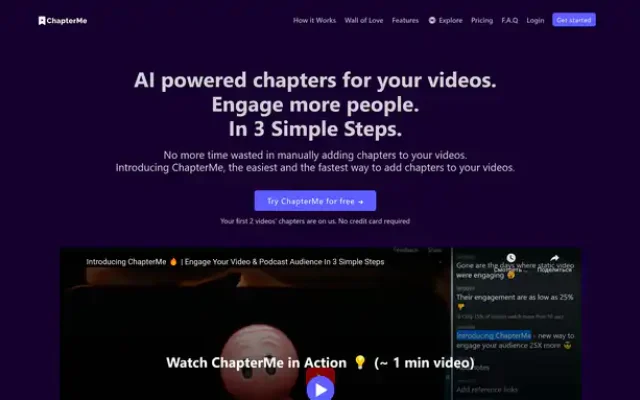
ChapterMe uses artificial intelligence to create chapters for videos. The platform makes it quick and easy to add chapters to videos, helping attract more viewers and making structured videos easier to navigate. ChapterMe supports YouTube videos and plans to integrate with other video platforms in the future. The website features customer reviews that praise the product and its ability to improve video content quality, increase its discoverability in search engines, and boost audience engagement. ChapterMe also offers a range of features, including SEO optimization for chapters, the ability to embed a video player on a website and customize its appearance to match a brand, analytics for chapters and audience engagement, and A/B testing to identify the most effective video content.
FAQ
Do I need a VPN or proxy to use the service?
It depends on your region. If the service is not available in your country, its site says so; a VPN or proxy is a way around regional limits, but follow the rules of the service and the laws of your country. How to choose a proxy is covered in our guide to proxies for Claude. The easiest check is to open the service site.
Is it safe to share my data with an AI tool?
Do not enter passwords, payment details, personal data or trade secrets. Many services store requests and may use them to train models, especially on free plans. Check the privacy policy and the settings of the service, where training can often be switched off.
Similar tools
-
28 0
D-ID turns a photo into a talking AI video avatar that reads your text in many languages; used for training, marketing and presentations.
- Video, Animation & Avatars
- Paid
- AI avatars
- Text to video
- Social media
-
28 0
MyHeritage is a service that helps users explore their family history.
- Video, Animation & Avatars
- Video editing
-
28 0
One of the top AI tools for creating beautiful photos without a camera.
- Video, Animation & Avatars
- Paid
- Image generation
- AI avatars
-
27 0
Elai lets you create text-based videos using AI. It enables you to make unique videos featuring a presenter without specialized equipment or a backdrop.
- Video, Animation & Avatars
- Paid
- AI avatars
- Text to video
- Social media
-
27 0
An effective AI-powered tool. The platform will be especially useful for video game developers.
- Video, Animation & Avatars
- Paid
- Games
-
27 0
Vidyo lets you instantly turn long videos into short clips highlighting the key information.
- Video, Animation & Avatars
- Paid
- Video editing
- Subtitles